Skip to content

Home/About/The IOH Building

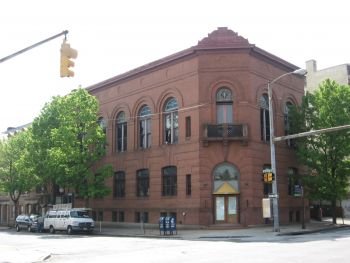
45 W. Preston Street · Built 1896

A building with six lives.

Fraternal lodge. Jazz dance hall. Greek school. Center Stage's first home. Today, a 150-seat black box. We're stewards of the latest chapter.

"Heptasoph"

Neo-Greek for "seven wise men." The Improved Order of Heptasophs was a fraternal and beneficiary organization that built and named the original hall.

Source · Improved Order of Heptasophs records, c. 1896

The six lives of 45 W. Preston

Before it was Theatre Project, it was five other things.

One building, six functions across 130 years. Each previous occupant left something — a floor plan, a bandshell, a reputation — that the next one inherited.

Life 01
1896
Fraternal hall

Heptasoph Hall

Constructed by the Improved Order of Heptasophs, a fraternal and beneficiary organization. The lodge served as their meeting hall and ceremonial space, built in the architectural language of late-Victorian Baltimore civic buildings.

Construction cost · $40,000 in 1896 dollars
Life 02
1924
Dance academy

Farson's Dance Academy

The Heptasophs moved on, and the building became Farson's Dance Academy — home to Farson's jazz and marching bands and one of the city's most popular Saturday-night dance halls. The 20-foot acoustic dome that defines the room today was here, doing what it was originally designed for: amplifying live music.

Life 03
1950s
Community center

Greek Orthodox community center & school

The building became a recreation center and school for the Greek Orthodox Church of the Annunciation — directly across the street. For a stretch of mid-century, the space served the neighborhood's Greek community as a gathering place, classroom, and event hall.

Life 04
1963
Regional theatre

Baltimore Center Stage's first home

For one chapter, the building housed Baltimore Center Stage — now Maryland's flagship LORT theatre and one of the country's most important regional companies. It started here, on West Preston Street, before moving to a larger facility. The walls held that DNA before they held ours.

Life 05
Late '60s
Mixed use / dormant

Realty offices & abandoned floors

When Center Stage left, the building's basement and second floor were abandoned. The first floor served as the offices of American Realty Company, which owned the building. For a few years, what had been a dance hall, a school, and a theatre was mostly silent.

Life 06
1971 — Today
Theatre Project

Theatre Project (the latest chapter)

Philip Arnoult and Antioch College's theatre program rented the building in 1971 and reopened the doors. Major renovations followed — first in 1972, again in 1983–84 — building out the contemporary black box. In 1994, the front stairs came out and chair lifts went in, making the venue ADA accessible. The building has been Theatre Project ever since: 50+ years and counting.

Major renovations · 1972, 1983–84, 1994
20'

The dome above your head

The largest interior bandshell in the country.

The 20-foot acoustic dome was built in 1896 to project the sound of fraternal ceremonies. By 1924 it was projecting jazz bands. Today it sits over a 150-seat black box, and it's still the largest interior bandshell of its kind in the United States. The reason an acoustic show feels different in this room is because the room was literally designed for that.

The room, in numbers

A historic building, tuned for contemporary work.

150
Stadium-style seats — every one with an unobstructed view
33×35
Sprung wood stage floor (feet)
20'
Original acoustic dome — largest interior bandshell in the U.S.
ADA
Accessible since 1994 — chair lifts replace original front stairs

The building was here before us. It will be here after us. Our job is to be good stewards of the chapter we're in.

— On the work of running a 130-year-old building

The dome is best experienced from inside it. Come hear something.

See What's On

ALTERNATIVE STYLE BELOW

Before It Was Theatre Project The building that currently houses Theatre Project was constructed in 1896 by the Improved Order of Heptasophs, (neo-Greek for “seven wise men”) a fraternal and beneficiary organization.  It cost $40,000 to build and was called Heptasoph Hall.  In 1924, the IOH moved locations, leaving the building to become Farson’s Dance Academy.  As a dance hall, the building housed Farson’s jazz and marching bands and was a popular place to go dancing on a Saturday night.  In the 1950’s, it served as a recreation center and school for the Greek Orthodox Church of the Annunciation right across the street.  In 1963, it served as Baltimore Center Stage’s first home. When Baltimore Center Stage left for a new facility, the basement and second floor were abandoned while the offices of American Realty Company, owners of the building, were housed in the first floor. As Theatre Project In 1971, Philip Arnoult, Theatre Project’s founder, and Antioch College’s theatre program, rented the building.  It underwent major renovations, first in 1972 and again in 1983-84.  In 1994, the front stairs were taken out and chair lifts were added to make Theatre Project ADA Accessible.  Today, Theatre Project boasts a 33’ x 35’ stage backed by a 20’ acoustic dome, the largest interior bandshell in the country.  The house has 150 stadium-style seats; the view from every seat is unobstructed.

Home/About/The IOH Building

45 W. Preston Street · Built 1896

A building with six lives.

Fraternal lodge. Jazz dance hall. Greek school. Center Stage's first home. Today, a 150-seat black box. We're stewards of the latest chapter.

"Heptasoph"

Neo-Greek for "seven wise men." The Improved Order of Heptasophs was a fraternal and beneficiary organization that built and named the original hall.

Source · Improved Order of Heptasophs records, c. 1896

The six lives of 45 W. Preston

Before it was Theatre Project, it was five other things.

One building, six functions across 130 years. Each previous occupant left something — a floor plan, a bandshell, a reputation — that the next one inherited.

Life 01
1896
Fraternal hall

Heptasoph Hall

Constructed by the Improved Order of Heptasophs, a fraternal and beneficiary organization. The lodge served as their meeting hall and ceremonial space, built in the architectural language of late-Victorian Baltimore civic buildings.

Construction cost · $40,000 in 1896 dollars
Life 02
1924
Dance academy

Farson's Dance Academy

The Heptasophs moved on, and the building became Farson's Dance Academy — home to Farson's jazz and marching bands and one of the city's most popular Saturday-night dance halls. The 20-foot acoustic dome that defines the room today was here, doing what it was originally designed for: amplifying live music.

Life 03
1950s
Community center

Greek Orthodox community center & school

The building became a recreation center and school for the Greek Orthodox Church of the Annunciation — directly across the street. For a stretch of mid-century, the space served the neighborhood's Greek community as a gathering place, classroom, and event hall.

Life 04
1963
Regional theatre

Baltimore Center Stage's first home

For one chapter, the building housed Baltimore Center Stage — now Maryland's flagship LORT theatre and one of the country's most important regional companies. It started here, on West Preston Street, before moving to a larger facility. The walls held that DNA before they held ours.

Life 05
Late '60s
Mixed use / dormant

Realty offices & abandoned floors

When Center Stage left, the building's basement and second floor were abandoned. The first floor served as the offices of American Realty Company, which owned the building. For a few years, what had been a dance hall, a school, and a theatre was mostly silent.

Life 06
1971 — Today
Theatre Project

Theatre Project (the latest chapter)

Philip Arnoult and Antioch College's theatre program rented the building in 1971 and reopened the doors. Major renovations followed — first in 1972, again in 1983–84 — building out the contemporary black box. In 1994, the front stairs came out and chair lifts went in, making the venue ADA accessible. The building has been Theatre Project ever since: 50+ years and counting.

Major renovations · 1972, 1983–84, 1994
20'

The dome above your head

The largest interior bandshell in the country.

The 20-foot acoustic dome was built in 1896 to project the sound of fraternal ceremonies. By 1924 it was projecting jazz bands. Today it sits over a 150-seat black box, and it's still the largest interior bandshell of its kind in the United States. The reason an acoustic show feels different in this room is because the room was literally designed for that.

The room, in numbers

A historic building, tuned for contemporary work.

150
Stadium-style seats — every one with an unobstructed view
33×35
Sprung wood stage floor (feet)
20'
Original acoustic dome — largest interior bandshell in the U.S.
ADA
Accessible since 1994 — chair lifts replace original front stairs

The building was here before us. It will be here after us. Our job is to be good stewards of the chapter we're in.

— On the work of running a 130-year-old building

The dome is best experienced from inside it. Come hear something.

See What's On
Before It Was Theatre Project The building that currently houses Theatre Project was constructed in 1896 by the Improved Order of Heptasophs, (neo-Greek for “seven wise men”) a fraternal and beneficiary organization.  It cost $40,000 to build and was called Heptasoph Hall.  In 1924, the IOH moved locations, leaving the building to become Farson’s Dance Academy.  As a dance hall, the building housed Farson’s jazz and marching bands and was a popular place to go dancing on a Saturday night.  In the 1950’s, it served as a recreation center and school for the Greek Orthodox Church of the Annunciation right across the street.  In 1963, it served as Baltimore Center Stage’s first home. When Baltimore Center Stage left for a new facility, the basement and second floor were abandoned while the offices of American Realty Company, owners of the building, were housed in the first floor. As Theatre Project In 1971, Philip Arnoult, Theatre Project’s founder, and Antioch College’s theatre program, rented the building.  It underwent major renovations, first in 1972 and again in 1983-84.  In 1994, the front stairs were taken out and chair lifts were added to make Theatre Project ADA Accessible.  Today, Theatre Project boasts a 33’ x 35’ stage backed by a 20’ acoustic dome, the largest interior bandshell in the country.  The house has 150 stadium-style seats; the view from every seat is unobstructed.